
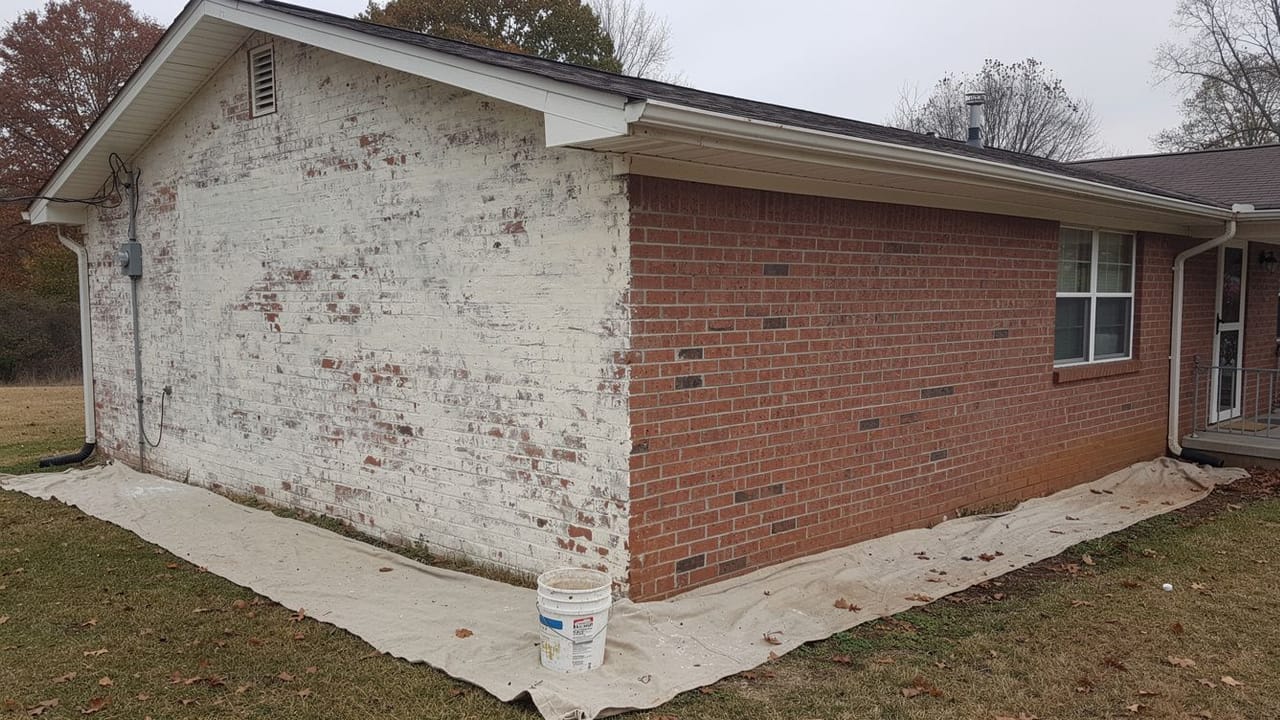
· by Michael Blair, Nashville's Painters
Painting a brick house is one of the few paint jobs that is close to permanent. Paint is hard to get off brick without damaging it, and the coating you choose decides how the wall handles water for as long as it is on there. Done right, it changes a dated house. Done over a wet or cracked wall, it speeds up the damage.
Here is how limewash, mineral paint and latex differ on brick, what the wall needs before anything goes on, and when Nashville has a say. It is part of our exterior painting service.
Is painting brick a good idea?
Painting brick can be a good idea when the wall is sound and the owner accepts that it is close to permanent. The Brick Industry Association’s Technical Note 6, Changing the Appearance of Brick Masonry, says many of these treatments are irreversible, that paint can be very difficult to remove from brick without damage, and that painted exterior brick can need repainting on a regular basis depending on the paint.
It also warns against painting to hide a failing wall. In most cases, the note says, deteriorating brick is the result of moisture problems nobody dealt with, and a coating that traps moisture in the wall can make that worse. So the first visit is a look at the brick, not a color card. A wall that is cracking, spalling or staining needs a mason before it needs us.
What is the difference between limewash and paint on brick?
Limewash soaks into brick and leaves it breathing, while acrylic paint forms a film on its face. The BIA note describes limewash as a mineral, water-based coating made from slaked or hydrated lime, compatible with brick and mortar and with no effect on the wall’s vapor permeability. It weathers into streaks over time, resists mold because of its high pH, and lasts five to 10 years or more depending on exposure and coats. Recoating does not require removing the old coats, and some limewashes can be washed off in the first few days if the look is wrong.
Mineral paint gives a fully opaque, matte finish and bonds chemically into the brick, so the note says it goes only on clean, unsealed brickwork and also leaves permeability alone. It typically carries warranties of 15 years or more. Diluted latex sold as a whitewash look is, in the note’s words, a faux finish: it changes the appearance without limewash’s performance, is less durable outside and can peel.
Can you use regular latex paint on brick?
Acrylic latex can go on brick, with conditions. The BIA note calls it one of the most common treatments, fully opaque and available in any color and sheen, but it forms a film, is usually vapor semi-permeable rather than fully permeable, and turns the wall into a recurring repainting job. It advises against heavy applications or too many coats, which lower the wall’s permeability further, and recommends products with a record of performing on brick in a similar climate.
Alkalinity is the other catch. Brick itself is normally pH neutral, the note explains, but the mortar around it is chemically basic, with a high pH, which can shorten the life of paint, so it calls for an alkali-resistant primer or a paint made for masonry. Our post on when primer is actually necessary covers primers on other surfaces; on brick, it is not optional.
What has to happen before brick is painted?
Before brick is painted, it is repaired, cleaned and dried. The BIA note lists the conditions to correct first, among them cracks wider than a business card is thick, loose brick, missing or crumbling mortar, damaged flashing, clogged weeps and signs of water getting in. New or repaired masonry cures and dries completely, at least 30 days, and the brick is cleaned thoroughly and painted only when it is dry.
In a historic overlay, there is a permit step as well. The Metro Historic Zoning Commission’s handbook lists painting among the work it does not review, except for masonry, and says that while the commission leaves paint color alone, painting masonry is something it reviews. So on a brick house in one of Nashville’s historic or conservation overlays, we check for a preservation permit before any coating is chosen.
Our crews paint and limewash brick houses, chimneys and fireplaces in Nashville and across Middle Tennessee. To have your brick looked at and the right coating chosen for it, ask us for a free estimate.
Sources
- Brick Industry Association, Technical Note 6: Changing the Appearance of Brick Masonry (2024) — Treatments often irreversible; paint hard to remove; moisture problems behind deteriorating brick; limewash and mineral paint keep vapor permeability; limewash five to 10 years or more; mineral paint warranties of 15 years or more; latex forms a film, semi-permeable, avoid heavy coats; alkali-resistant primer or masonry paint; repairs first; cure at least 30 days; clean and dry.
- Metro Nashville Historic Zoning Commission, Historic Zoning Handbook — Painting is not reviewed except for masonry; paint color is outside its review, the painting of masonry is not.
FAQ
Painting Brick: Limewash, Mineral Paint or Latex — questions
How long does limewash last on brick?
Five to 10 years or more, according to the Brick Industry Association, depending on the weather the wall sees, the number of coats and how much weathering you want. Recoating is simple because the old limewash does not have to come off first, and limewash leaves the brick’s vapor permeability unchanged.
Can painted brick breathe?
It depends on the coating. The Brick Industry Association says limewash and mineral paint leave brick’s vapor permeability unchanged, while acrylic latex forms a film and is usually only semi-permeable. Heavy coats or many coats of latex lower permeability further, which matters because a coating that traps moisture can damage brick.
Do you need a primer before painting brick?
For acrylic latex, yes, or a paint made for masonry. The Brick Industry Association explains that brick is normally pH neutral but sits in high-pH mortar, which can cut paint durability, and recommends an alkali-resistant primer or a masonry-designated paint. Limewash and mineral paint follow their own makers’ instructions.
How long should new brick cure before painting?
At least 30 days, according to the Brick Industry Association, which says new or repaired masonry should cure and dry completely before any treatment and that extra drying time may be needed. The brick should also be cleaned thoroughly and be dry on the day the coating goes on.
Do I need permission to paint a brick house in Nashville?
Only if it is in a historic overlay. The Metro Historic Zoning Commission’s handbook says the commission leaves paint color alone but reviews the painting of masonry, which makes painting brick the exception to its rule that painting needs no review. Outside an overlay, the commission has no say in it.