
· by Michael Blair, Nashville's Painters
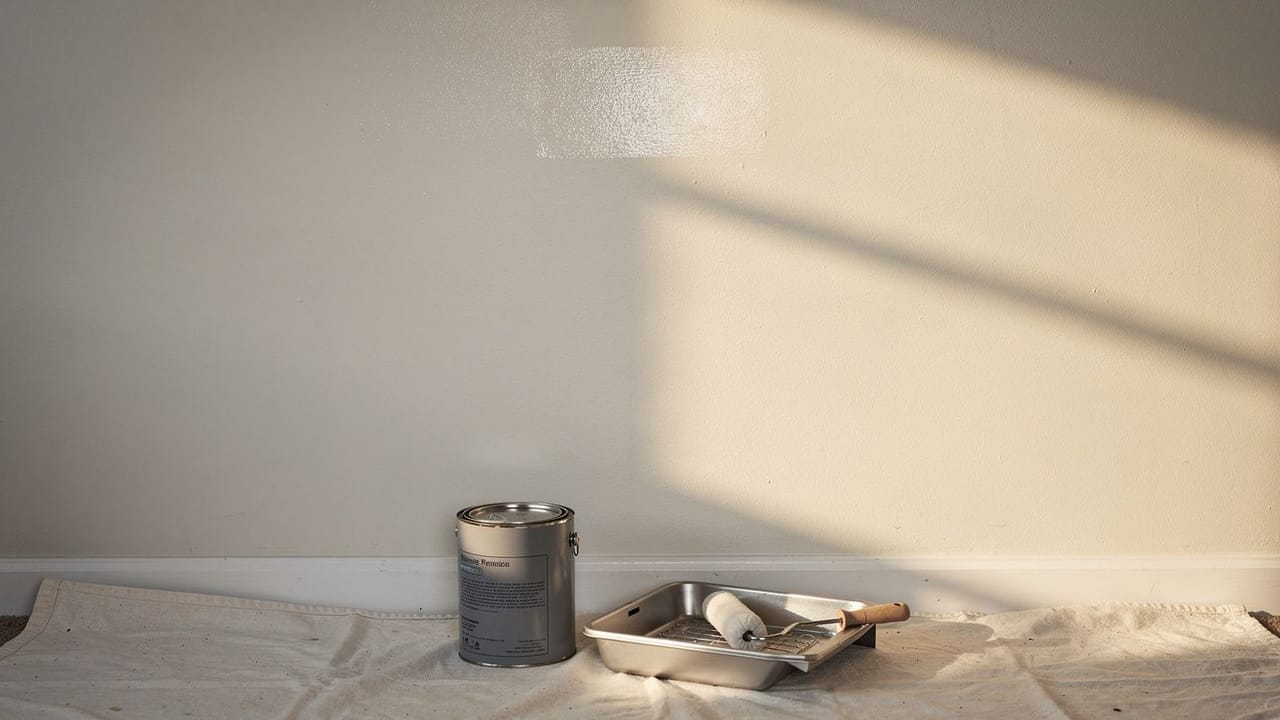
The can on the shelf has the right name on it, the color matches the label, and the spot you touched up still shows from across the room. Usually it reads as a patch that is a little shinier or a little duller than the wall around it, and it shows most when light from a window rakes across the surface. That is not a bad can of paint. It is how paint behaves, and the fix is mostly in how the touch-up goes on. It is also the reason we sometimes recommend painting a whole wall on an interior painting job when the owner only asked about one spot.
Why does touch-up paint show when the color is right?
Because what you are seeing is usually a difference in sheen and paint thickness, not a difference in color. Sherwin-Williams defines paint flashing as an uneven look in a coating’s gloss, sheen or luster, and it lists the usual causes: paint over a porous surface, uneven film thickness from lapping wet and dry edges, paint applied too thin, and moisture or temperature swings while it dries.
Dunn-Edwards’ technical bulletin on touch-up adds the rest of the list. The tool and technique differ from the original coat. The temperature and humidity on touch-up day are not what they were when the wall was painted. Darker colors are harder to touch up, and so is any paint with a sheen. A heavy touch-up builds more film than the wall around it, and that extra thickness is what catches the light. If the original coat never reached its full film build, it may not be showing its true color or sheen in the first place, so even perfect touch-up paint lands next to something that is not quite what the can promised.
Light is the judge. A patch that disappears under a ceiling fixture can stand out at four in the afternoon when sun comes in low across the wall.
Does a patched spot need primer before the touch-up?
Yes, when the spot is new joint compound or repaired drywall, because bare patch material soaks up paint differently from a painted wall and dries to a dull spot. Sherwin-Williams’ flashing page says to spot-prime patched areas so the porosity of the surface is even before the topcoat goes on. Benjamin Moore’s guide to touching up paint draws the same line from the other side: prime where the drywall itself was damaged, and skip primer when you are only fixing color over sound paint.
So a nail hole or a dent filled with compound gets primer first. A scuff on sound paint usually does not need paint at all at first; Benjamin Moore suggests trying a rag with soap and water before anything else. Patches that are larger than a nail hole, or that sit in a textured wall, are their own job, and our drywall and texture repair service covers matching the texture before any paint goes near it.
What is the right way to apply touch-up paint?
Roll it on in light coats with as little paint as will cover, and do not brush it out. Dunn-Edwards prefers a small “weenie” roller with a good synthetic cover and a nap of 1/4 to 1/2 inch, and it is specific about the brush: feathering with a brush leaves a flat halo around the spot, while feathering with a synthetic roller cover blends without one.
The three makers agree on the rest:
- Use the least paint you can. A thick touch-up builds film, and film build is what flashes.
- Thin it slightly. For a water-based paint with a sheen on a smooth wall, Dunn-Edwards suggests about 5 to 10 percent clean water, and Sherwin-Williams also advises thinning the touch-up coat.
- Match the original tool and direction. Benjamin Moore says to use the same kind of brush or roller as the first painting, follow its direction, and work from the center of the spot outward.
- Build it in light coats. Sherwin-Williams says to let each coat dry fully, which on its touch-up page is generally 1 to 2 hours, with a cure of up to 24 hours depending on humidity and the paint.
When the whole wall is the better fix
When a wall needs more than a few touch-ups, paint it from corner to corner. That is Dunn-Edwards’ advice for a surface that needs excessive touch-up, and Sherwin-Williams gives the same answer for larger areas or finishes that do not match. A corner is a natural break where light changes anyway, so a fresh wall next to an older one rarely reads as a patch.
Sheen and age decide a lot of these. Sherwin-Williams notes that flat and matte touch up more easily than satin or semi-gloss, and Benjamin Moore puts it simply: the glossier the finish, the harder the touch-up. That is part of why our guide to choosing paint sheen room by room warns against mixing sheens on one wall. Dunn-Edwards defines touch-up as paint on a surface painted within about the last year, and it says no paint maker can guarantee every color will touch up. If the wall was sprayed originally, repeating the spray for one spot is usually not practical, so the patch goes on with a roller and may differ in texture.
If you have a wall that shows every patch, tell us the room and send a photo taken in the light where it shows. We will say whether rolling the spots will hold or the wall wants a full coat.
Sources
- Dunn-Edwards Technical Bulletin: Touch-Up — Touch-up defined as paint on a surface painted within about a year; the variables that make touch-up show; roller over brush, 1/4 to 1/2 inch synthetic nap, least paint, 5 to 10 percent thinning, repaint corner to corner, sprayed walls.
- Sherwin-Williams: Paint Flashing — Definition and causes of flashing; spot-prime patched areas; thin the touch-up coat.
- Sherwin-Williams: Paint Touchups — Flat and matte touch up more easily than satin or semi-gloss; light coats; 1 to 2 hour dry and up to 24 hour cure; repaint the wall for larger areas.
- Benjamin Moore: How To Touch Up Paint — Glossier finishes are harder; same tool and direction as the original; clean scuffs first; prime only where the drywall is damaged.
FAQ
Why Touch-Up Paint Never Quite Matches the Wall — questions
What is flashing in paint?
Flashing is an uneven look in a painted surface’s gloss or sheen, so one area reflects light differently from the rest. It comes from porous patches, uneven paint thickness, paint applied too thin, and moisture or temperature swings while the paint dries. Touch-ups are a common cause because they add film over paint that is already there.
Should you thin paint for touch-ups?
Slightly, for a water-based paint with a sheen on a smooth wall. Dunn-Edwards suggests about 5 to 10 percent clean water, and Sherwin-Williams also advises thinning the touch-up coat. Thinner paint builds less film, so the touched spot is less likely to catch the light differently from the paint around it.
Does flat paint touch up better than satin?
Yes. Flat and matte finishes hide touch-ups better than satin or semi-gloss, and the paint makers agree that the glossier the finish, the harder it is to touch up without the spot showing. On a satin or semi-gloss wall that needs several spots fixed, repainting the whole wall is often the cleaner result.
How long does touch-up paint take to dry?
Sherwin-Williams says touch-up paint generally dries in 1 to 2 hours and can take up to 24 hours to cure, depending on humidity and the type of paint. Let each light coat dry fully before the next, and judge the result only once it has dried, because wet paint looks darker and shinier.
Can you touch up a wall that was sprayed?
Not easily. Dunn-Edwards notes that spraying a single touch-up to match a sprayed wall is usually not practical, so the spot goes on with a roller, and the rolled texture can differ from the sprayed finish around it. Where that difference shows, rolling the full wall from corner to corner is the usual answer.