
· by Michael Blair, Nashville's Painters
Exterior paint in Middle Tennessee rides a wide swing every year: NWS Nashville’s climate normals put the average July high near 91°F and the average January low near 30°F. Properly applied to the right wood, paint can give up to 10 years of service, according to Purdue Extension’s bulletin on paint failure problems, and the same bulletin says paint under normal conditions isn’t affected by its first two or three years outdoors. Paint that fails in two or three years is reporting something, and it’s usually moisture or the preparation underneath.
What does peeling to bare wood mean?
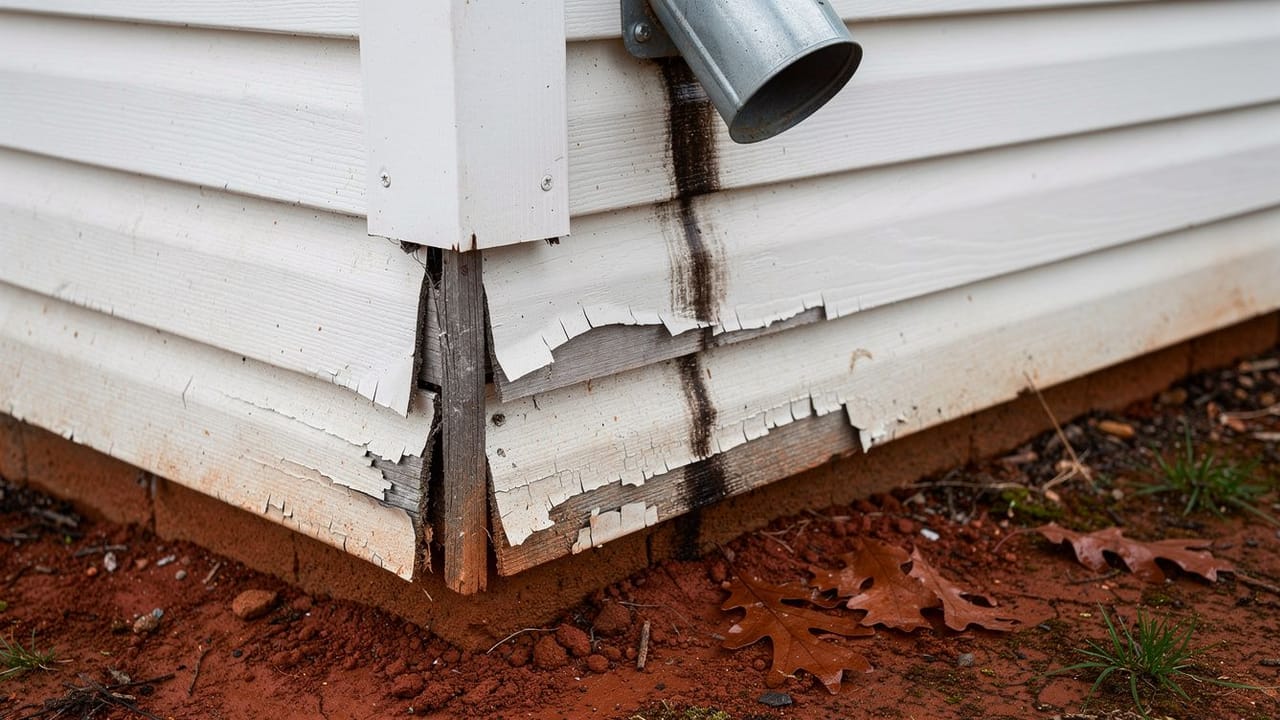
Peeling down to bare wood usually means moisture got behind the film. The Forest Products Laboratory’s chapter on finishing wood describes blisters forming between the wood and the first coat, and in bad cases the paint peeling away. Peeling that leaves earlier layers intact is intercoat peeling, a weak bond between the new coat and the old one; the same chapter traces it to weathered paint that wasn’t cleaned well enough before repainting, and says it usually shows up within a year.
Blisters take a closer look, because there are two kinds. Moisture blisters appear after spring rains and through the summer, worst on the sides of a house that face the prevailing wind and rain. Temperature blisters come within hours or a day or two of painting, hold no water, and happen when oil-based paint goes onto a cool surface the sun then heats. Chalking, the powder that comes off on your hand, is normal weathering, and the Forest Products Laboratory even calls a little of it desirable because it lets the surface clean itself. Light chalk still keeps water out; deep chalking, checking or cracking means the film has stopped doing its job.
Where does the moisture behind peeling paint come from?
Rain and dew are part of it. Purdue names moisture as the most common cause of premature paint failure on wood, and counts vapor moving out from inside the house as just as serious as the weather. Outside water gets in at joints and through the end grain of boards and siding, which is why Purdue notes that paint normally fails at the ends and edges of a board first. On a wall that keeps peeling we check the flashing where a roof meets the wall and whether the gutters spill over before we talk about paint. Inside, the handbook’s advice is to vent clothes dryers, showers and cooking to the outside, never into the crawl space or attic.
That is why repainting a peeling area without finding the water source produces the same failure on the same wall. The Forest Products Laboratory is blunt that getting rid of the moisture problem is the only practical way to prevent moisture blisters. Paint is not a waterproofing product. The indoor version of the same problem is in our post on paint peeling off a bathroom ceiling.
What does proper exterior paint prep include?
Scraping away all the loose paint, then sanding the bare spots to take off the weathered wood and feather the hard edge of the old paint, then scrubbing what remains with a brush, mild detergent and water and rinsing it clean. That is the order the Forest Products Laboratory gives, with a commercial cleaner or dilute bleach where there is mildew. Bare wood gets a paintable water-repellent preservative and at least three days to dry, then primer, and a stain-blocking primer on woods whose extractives bleed through.
Caulking comes after priming, not before: Purdue’s instruction is to caulk large cracks and openings after treating and priming. Then the finish coats. Purdue’s guide to selecting and applying exterior finishes calls for two coats of good acrylic latex over the primer, and where that isn’t practical for the whole house, two on the south and west sides, which deteriorate first. The first topcoat goes on within two weeks of the primer and the second within two weeks of the first, so the coats bond to each other. This is the work underneath our exterior painting.
- Scrape loose paint, then sand bare spots and feather the edges
- Scrub with a brush and mild detergent, rinse, and let it dry
- Water-repellent preservative on bare wood, then prime every bare spot
- Caulk large cracks and gaps after priming, not before
- Two finish coats, each within two weeks of the one before
Timing a Nashville exterior
Latex house paint wants at least 50°F when it goes on, and the Forest Products Laboratory adds that the temperature shouldn’t drop below 50°F for at least 24 hours afterward, with a warning against painting on autumn days or cool spring evenings when heavy dew forms overnight. In NWS Nashville’s normals, May and September lows sit around 58 and 62°F, while April and October lows land right at about 49 and 50°F. So in the shoulder months it’s the overnight forecast that decides the day, and our post on the last month to paint outside goes through the fall cutoff.
Avoid painting a wall in direct sun, particularly with oil-based or dark paint, or a heavy coat. Purdue explains the blister: a thin dry skin forms on the fresh paint, and the thinner trapped underneath turns to vapor and can’t get out. Its advice is to follow the sun around the house. If you have a wall that has failed early and want it looked at, ask us for a free estimate.
Sources
- USDA Forest Service, Forest Products Laboratory, Wood Handbook Chapter 15: Finishing of Wood (FPL-GTR-113, 1999) — Moisture and temperature blisters; intercoat peeling within a year; chalking and the cloth test; scrape, sand, scrub and rinse; water-repellent preservative and 3 days; stain-blocking primer; two topcoats and service life; 50°F and 24 hours; dew; venting; bandage test
- Purdue Extension, NCR-133 Paint Failure Problems and Their Cure — Up to 10 years of service; unaffected for the first two to three years; moisture the most common cause, inside vapor equally serious; failure at board ends and edges; flashing and gutters; caulk after priming; temperature blisters and following the sun
- Purdue Extension, NCR-135 Selection and Application of Exterior Finishes for Wood — Two coats of acrylic latex over primer; two topcoats on south and west sides first; topcoats within 2 weeks
- National Weather Service Nashville, Nashville Climate Records — Normal July high 90.9°F and January low 30.1°F; monthly normal lows for April, May, September and October
FAQ
Why Exterior Paint Fails Early in Nashville — questions
How often should a Nashville house be repainted?
By the Forest Products Laboratory’s figures, primer plus two topcoats of good acrylic latex on prepared wood siding can last up to about 10 years, and a single topcoat over primer about four to five. South and west walls weather fastest, so they usually come due first. Rub the paint with a dark cloth, or a white one on dark paint: some chalk on the cloth is normal, but heavy chalking, checking or cracking means it is time.
Can you paint over peeling paint?
Not successfully. New paint holds only as well as the layer beneath it, so loose paint has to be scraped off and the edges sanded smooth first. A simple test where the old paint looks sound: paint a small patch, let it dry overnight, press an adhesive bandage on it and snap it off. Paint on the bandage means the old coat is too chalky or poorly bonded and has to come off, or the new work peels along the same lines, often within a year.
Is pressure washing before painting a good idea?
Washing is essential; force is not the point. The Forest Products Laboratory’s method is scrubbing with a brush or sponge and mild detergent, a mildew cleaner where needed, then a thorough rinse with fresh water and time to dry before any paint goes on. We keep the pressure low, because joints and end grain are where water gets into siding and where paint fails first.
How do you prevent paint from peeling?
Keep water out and prepare properly. Fix flashing and overflowing gutters, vent dryers and showers outdoors, then scrape, sand and clean the surface, prime bare wood and caulk after priming. Two coats of good acrylic latex go on last, at 50°F or warmer and out of direct sun.